Reflections on Art from 100 Years Ago

The Reunion

By Fr. Peter Fennessy, SJ
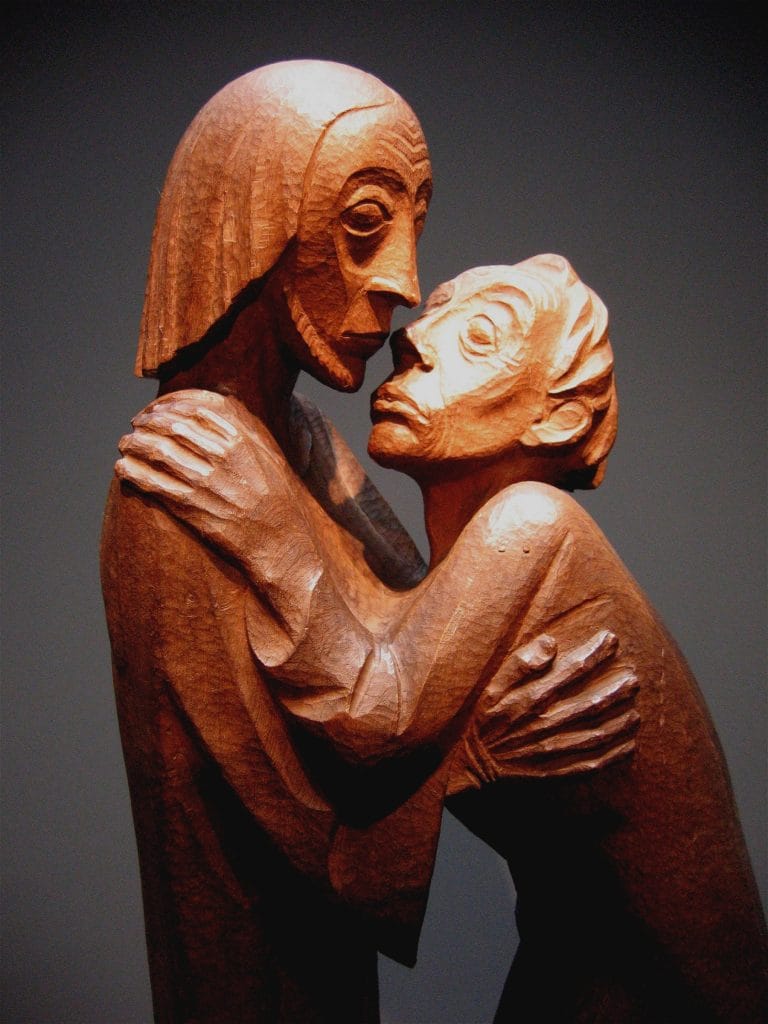
Ernst Barlach, The Reunion (1926), sapeli mahogany sculpture, 35.4 × 15 × 9.8 inches, Ernst Barlach House.
(Photo credit: Rufus46, Wikimedia Commons)

Thomas wasn’t with the other disciples when Jesus appeared to them Easter Sunday evening. He declared he wouldn’t believe Jesus was risen unless he put his finger into the wounds in His hands and his hand into the wounds in His side. Today’s Gospel (John 20:19-31) relates how Jesus appeared a week later and offered Thomas the opportunity to do just that.  Paintings of this event are usually entitled “The Incredulity of Thomas” and focus of the probing of the wounds. Barlach’s sculpture, “The Reunion,” focuses instead on the essence of these appearances—relationship and reunion.

Jesus stands straight, strong, tall; Thomas bends over, faltering. They embrace tenderly and are reconciled; the bond between them is renewed and strengthened.  Jesus holds and supports Thomas and offers him understanding, compassion, acceptance, forgiveness, love. He accepts even the unreasonable demands Thomas has made. Thomas leans on Jesus with sorrow, repentance, relief, joy and love. He no longer needs to probe the wounds; the presence and embrace of Jesus is enough. “The Reunion” means more than this one encounter. It alludes to the emotions that create, destroy and reestablish all human relationships. It invites us to examine the relationships in our own lives.

Reflections on Art from 100 Years Ago

The Pietà

By Fr. Peter Fennessy, SJ

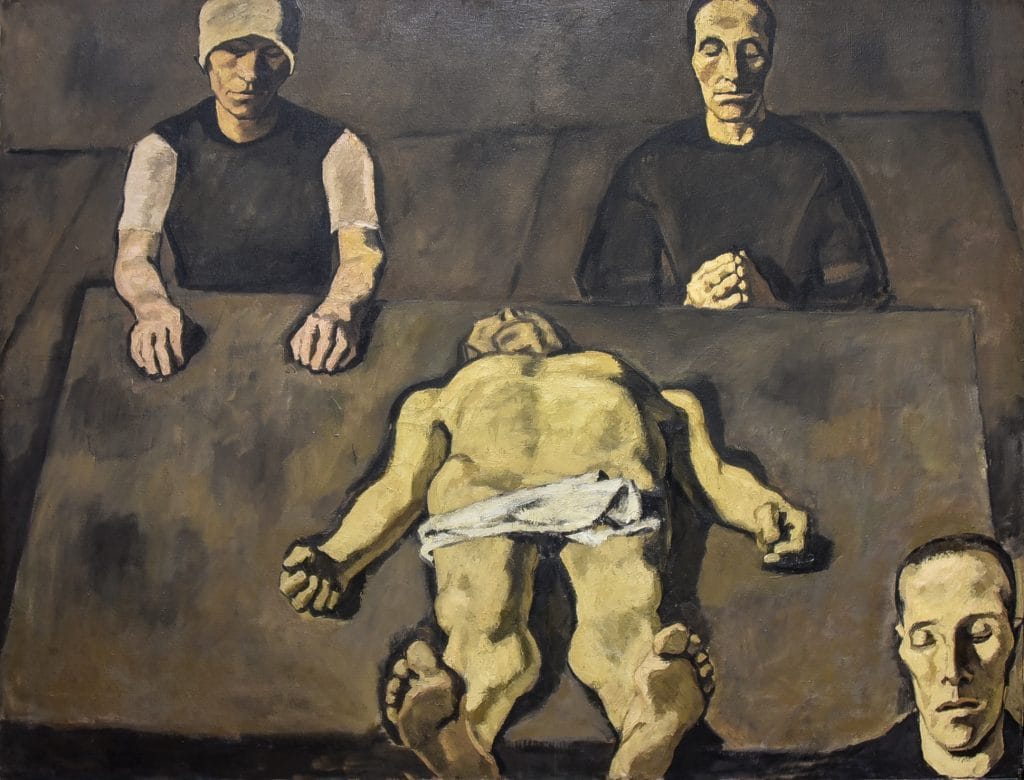
dead figure lays on tomb, two men stand behind him, another man in right corner

Albin Egger-Lienz, Pietà (1926), oil on canvas, 68.1 × 90.9 inches, The Leopold Museum, Vienna, Austria.

Its orientation recalls Mantegna’s “Lamentation of Christ.” Egger-Lienz’s mourners are less distraught than Mantegna’s, but they’re well acquainted with grief, and their mourning is the more moving for being solemn and silent. This woundless body might represent any death in the peasant community; these mourners might stand for all who mourn. The empty place in the lower left invites us to enter the scene as a fourth mourner.

Egger-Lienz’s “The Dead Christ” (1926) is an almost exact copy of this painting without the mourners, as if He were lying in the tomb. “Pietà” focuses on sorrow; “The Dead Christ” focuses on the silence of the tomb.

On Holy Saturday we grieve with Mary and the disciples, or we rest with Christ and so may say with Paul Claudel, “With you I have descended into the tomb, and have lain there without motion, and the confines of your tomb have become the confines of my universe.”

Reflections on Art from 100 Years Ago

The Annunciation of the Virgin Mary

By Fr. Peter Fennessy, SJ

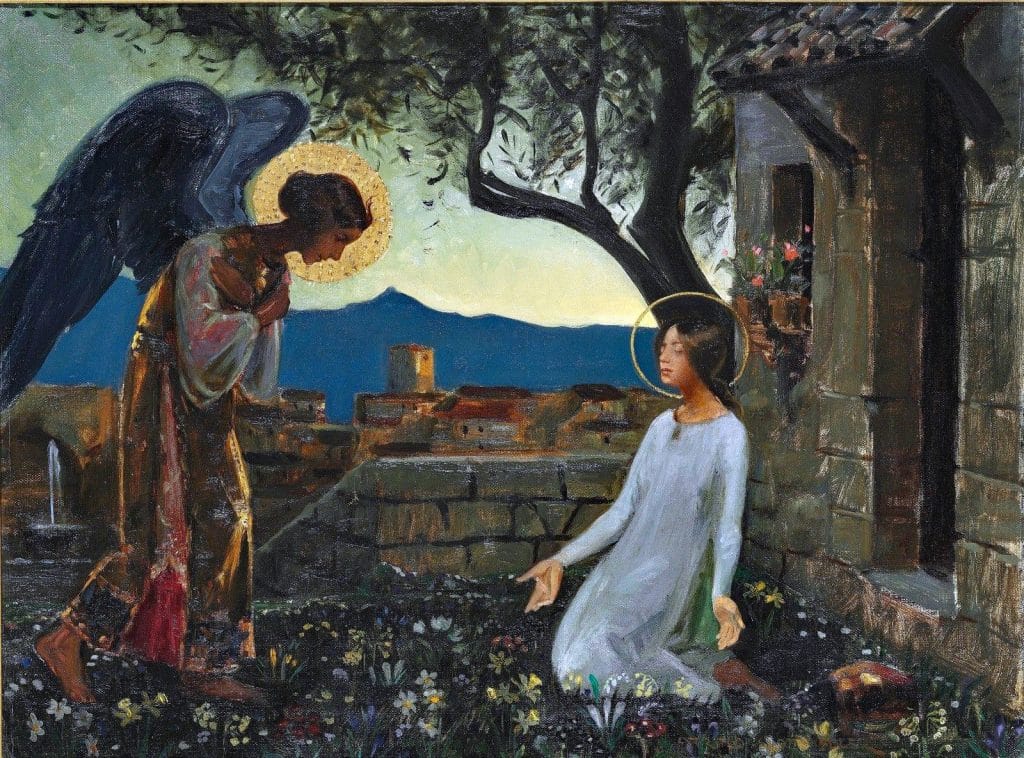
Harald Slott-Møller, The Annunciation of the Virgin Mary (1926), oil on canvas, 19.3 × 25.6 inches, private collection.

We celebrate today the Annunciation to the Virgin Mary (the earliest feast dedicated to her) and the Incarnation of the Lord, since the Word became flesh when Mary gave her consent. The abundant flowers denote new life and fecundity as well as purity. Today’s Gospel tells the story (Luke 1:26-38). And Harald Slott-Møller’s “The Annunciation of the Virgin Mary” (1926) illustrates it.

Painters often depicted Mary regally dressed and in palatial surroundings to stress her dignity, worth and nobility. Here, Mary is a young girl beside a humble home. She’s bare footed and clad in a simple shift. When the angel appeared, she had been doing some household task and, suddenly startled, she dropped a container behind her. The Archangel Gabriel bows to her, his arms are crossed in reverence. She shows what kind of person she is by her posture, facial expression and open arms with which she gives herself totally to God’s will. To become pregnant but not by Joseph could result in divorce, disgrace and even stoning to death. She has ample reason for anxiety and fear. But her response to that is the simple reply: “I am God’s servant. Whatever God wants, my answer is ‘Yes’.”

Reflections on Art from 100 Years Ago

Desert sojourn, a honeymoon with the Lord

By Fr. Peter Fennessy, SJ

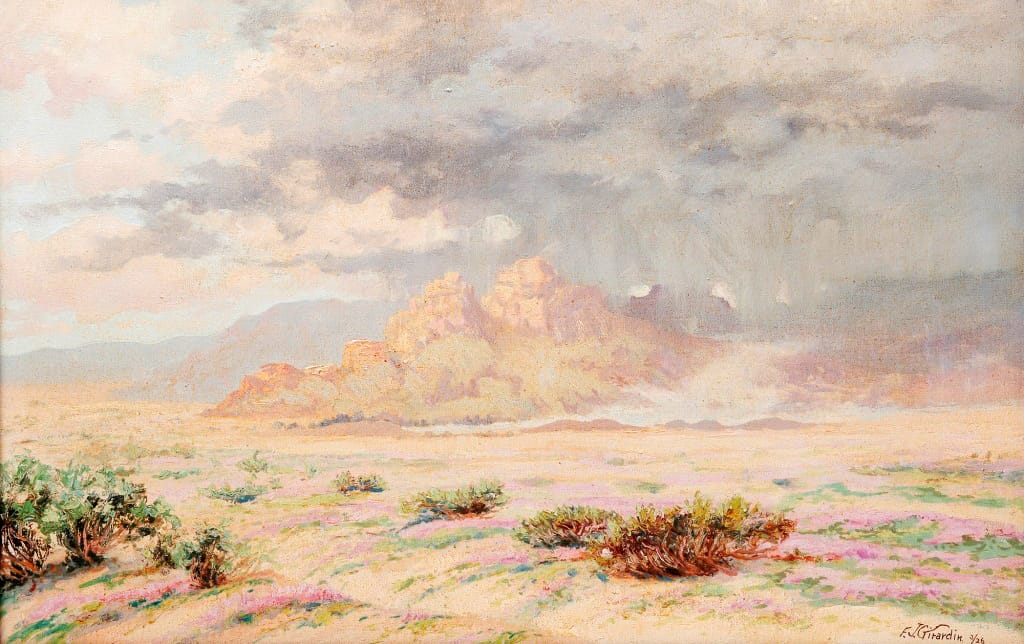
Frank J. Girardin, Desert Landscape (1926), oil on canvas, 20 × 30 inches, private collection.

The Jews spent 40 years in the desert, and so “40” came to signify a time of prayer, preparation and perhaps penance. Moses, Elijah and Jesus all fasted for 40 days, and also in the desert.

The desert became a special place for Israel. Their sojourn in the desert, despite difficulties, was a honeymoon with the Lord. When later Israel became unfaithful, God declared He would allure her into the desert and speak tenderly to her heart, and she would respond to Him as in the days of her youth (Hosea 2:14-15). Today we begin 40 days of Lent, and Jesus invites us to come apart with Him into a desert place and rest awhile (Mk 6:31).

Those who venture into the desert must leave the superfluous behind, travel with the bare necessities and depend on God alone. They must enter its solitude and silence to hear the small still voice of God. They must encounter the demons that are there and those they bring with them, discover their deceptions and resist their temptations as Jesus did. The desert is a place of purification and conversion, but rain from heaven can make even our desert bloom into newness of life.