Reflections on Art from 100 Years Ago

In the storm with Jesus
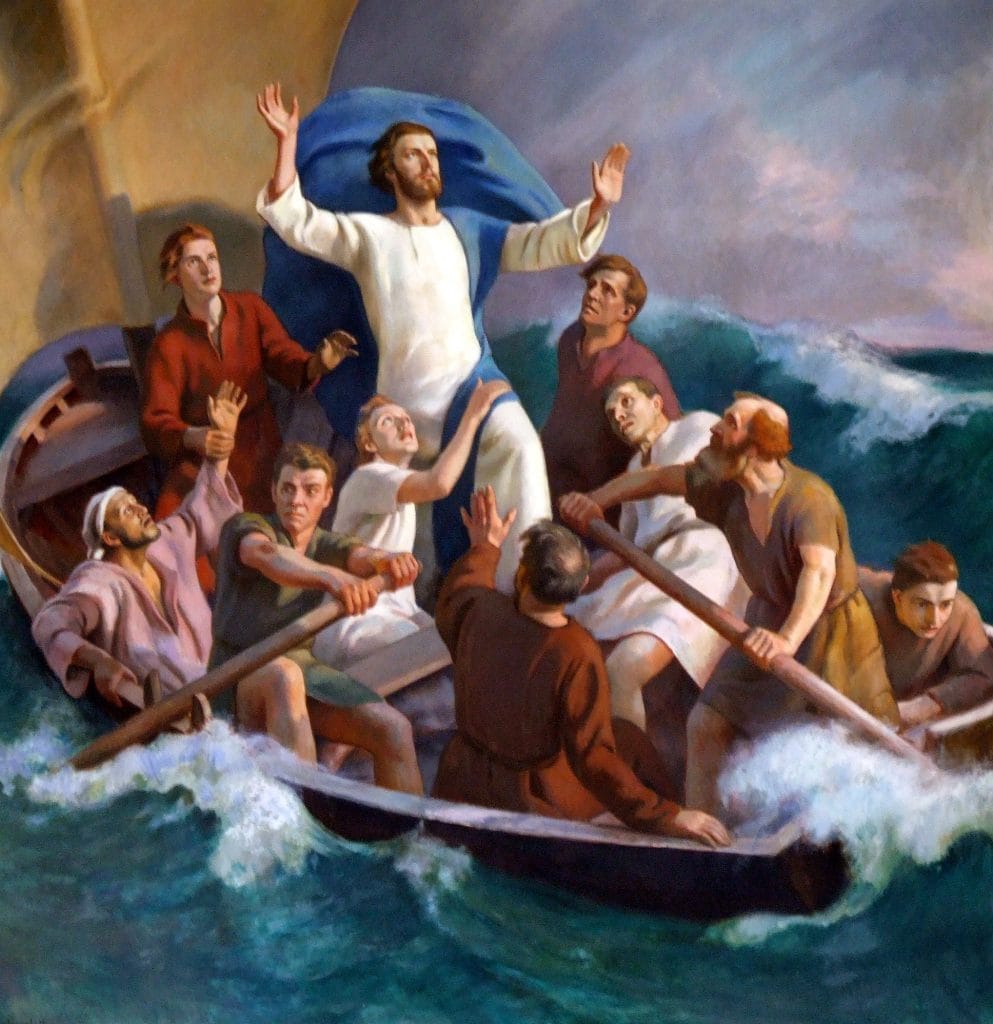
Eero Järnefelt, detail of In a Storm with Jesus (1926), original size 17.7 feet high × 12.1 feet wide, Church of the Holy Trinity, Raahe, Finland.

Today’s Gospel (Mk 4:35-41) tells the story of Jesus calming the storm. Eero Järnefelt’s altarpiece, “In a Storm with Jesus” (1926), portrays the moment when Jesus commands the wind and waves to be still. 

The experienced fishermen were in fear for their lives, while the landsman Jesus stayed soundly asleep. They woke Him in their panic. “Didn’t He care that they were perishing?” What could they possibly have expected Him to do? In fact, He did something they could never have expected. Jews believed that only God could command the wind and waves. But Jesus, by doing precisely that and with just a word, proved that He possessed an authority and power reserved for God alone. Well might the awe-struck disciples ask, “Who is this man, that even the wind and the sea obey Him?”

Storms and raging waters are Biblical metaphors for the trials and troubles of life. This story then is a parable about our own struggles and emotional storms, when God seems far away or fast asleep. It invites us to trust that Christ will deliver us by His power from the storms that rage outside or sustain us by His presence from the tempestuous fears within.
Reflections on Art from 100 Years Ago

Solemnity of Mary, Mother of God

By Fr. Peter Fennessy, SJ

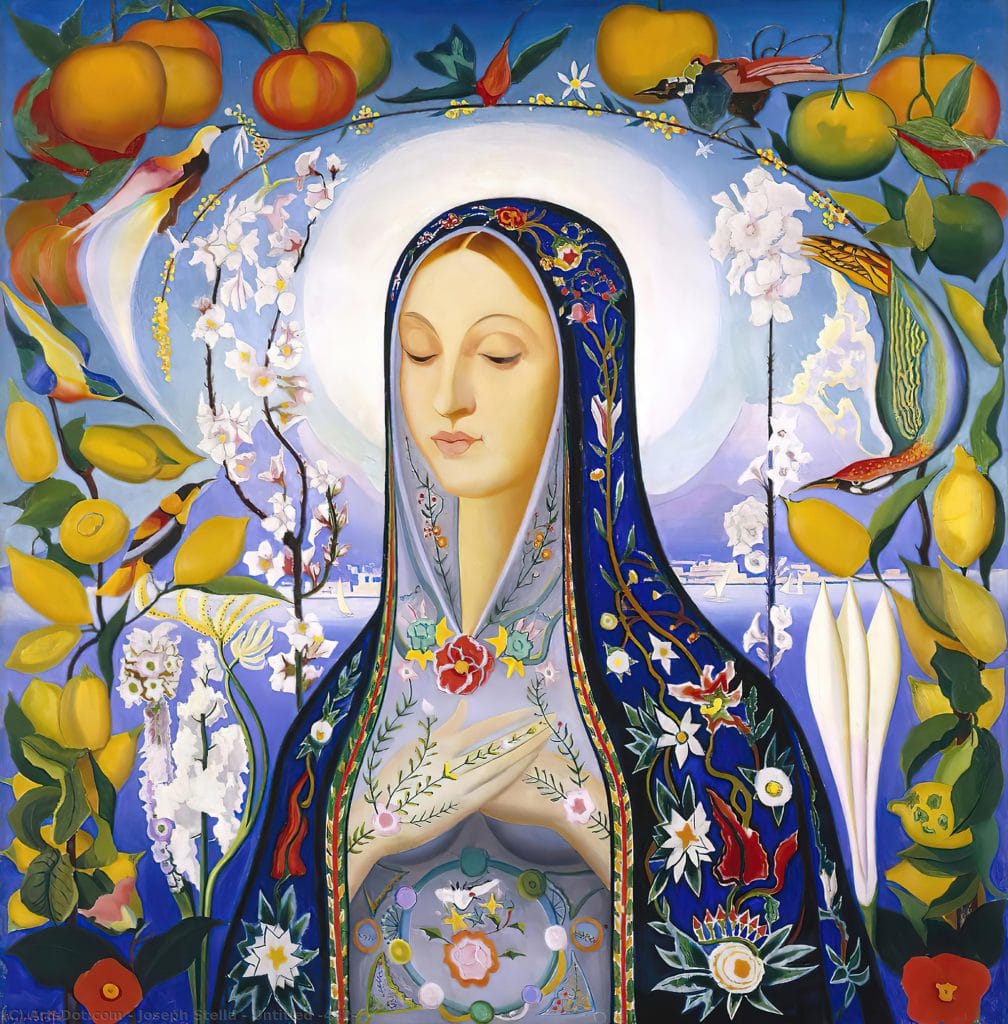
Joseph Stella, The Virgin (1926), oil on canvas, 39.7 × 38.8 inches, Brooklyn Museum.

Joseph Stella became famous for his Cubo-Futurist compositions of New York. But he felt suffocated by the big city and longed for his native Italy. In “The Virgin” (1926) he turned away from urban imagery back to nature, spirituality and the traditions of his homeland.

Behind Mary’s halo Mount Vesuvius rises over the Bay of Naples. The vibrant colors of this painting are those of the ceramics of southern Italy. The Virgin is what he remembered from the Italian Renaissance altarpieces and the religion of his youth. And although the lilies to her left proclaim Mary to be a virgin, she’s surrounded by birds and by Mediterranean fruits and flowers that stand for life, fecundity and fruitfulness. Flowers adorn her mantle, tunic, hands and significantly the circle that in icons of Our Lady of the Sign represents her womb which holds the newly conceived Son of God.

She has become the Mother of God, whose feast we celebrate this first day of the year. Mary’s face shows peace, her lowered eyes humility and prayerfulness, her folded hands acceptance of God’s will and her love of the Child within her. She is a model for us and our mother as well. 

Reflections on Art from 100 Years Ago

Thanksgiving at Plymouth

By Fr. Peter Fennessy, SJ

Jennie Augusta Brownscombe, (detail) Thanksgiving at Plymouth (1925), oil on canvas, original 30 × 39.13 inches, National Museum of Women in the Arts, Washington, D.C.

Colonists in New England and Canada regularly celebrated days of prayer and thanksgiving. Jennie Augusta Brownscombe’s “Thanksgiving at Plymouth” depicts Plymouth Colony’s first harvest feast in 1621, often thought to be the origin of our Thanksgiving. Although Native Americans attended this celebration, Brownscombe may have been making a point when she huddled them together so far to the side. Thanksgiving is not a happy feast for Native Americans.

Christians believe gratitude is appropriate every day. Each day at the Eucharist (Greek for “thanksgiving”) most Prefaces begin, “It is truly right and just, our duty and our salvation, always and everywhere to give You thanks, Father most holy, through Your beloved Son, Jesus Christ.” Saint Paul writes, “In all circumstances give thanks, for this is the will of God for you in Christ Jesus” (1 Thessalonians 5:18). Saint Ignatius, in the final Contemplation of his Spiritual Exercises, says that all things around and within us are gifts from God, for which we ought to be grateful. For Ignatius, ingratitude was the greatest of all sins. We should make our own the prayer of Dag Hammarskjöld that begins, “For all that has been—Thanks!”

Reflections on Art from 100 Years Ago

By Fr. Peter Fennessy, SJ

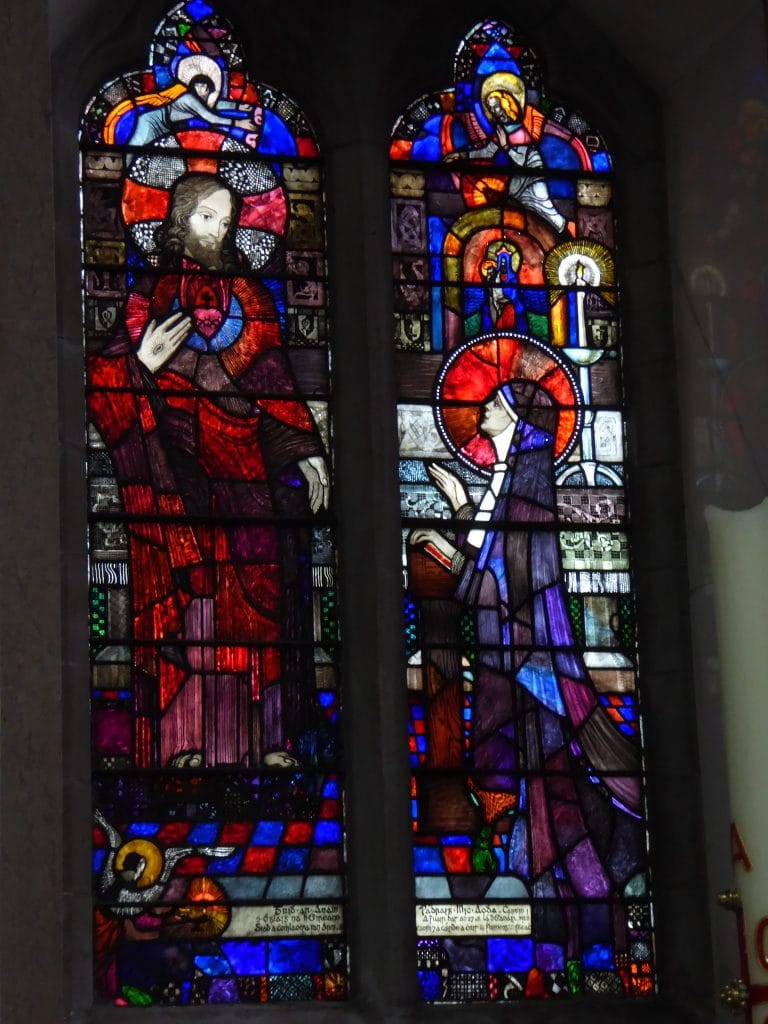
Hubert McGoldrick, (detail) Revelation of The Sacred Heart of Jesus to St. Margaret Mary Alacoque (1925), stained glass window, St. Brendan’s Cathedral, Loughrea, County Galway, Ireland

We celebrate the feast of Saint Margaret Mary Alacoque on October 16 not only because of her holiness of life, but also because of the Lord’s revelations to her of His love for us, illustrated in this stained-glass window.

Those revelations led to our modern devotion to the Sacred Heart and its feast. Pope Pius XI said, “the feast of the Sacred Heart of Jesus was instituted at a time when men were oppressed by the sad and gloomy severity of Jansenism, which had made their hearts grow cold, and shut them out from the love of God and the hope of salvation.” That heresy taught that people were predestined to heaven or hell and could do nothing about it, that most people couldn’t love God enough to be forgiven their sins and were unworthy to receive Communion or its grace.

In apparitions to Margaret Mary between 1673 and 1675 Jesus made clear His love for us and His disappointment—not anger—when we fail to return the love that He so much desires from us. Margaret Mary’s director, St. Claude La Colombière, SJ, and his fellow Jesuits today promote this devotion to the Sacred Heart and oppose any Jansenist denial of it.

stained glass

100th Anniversary Celebration Kick Off

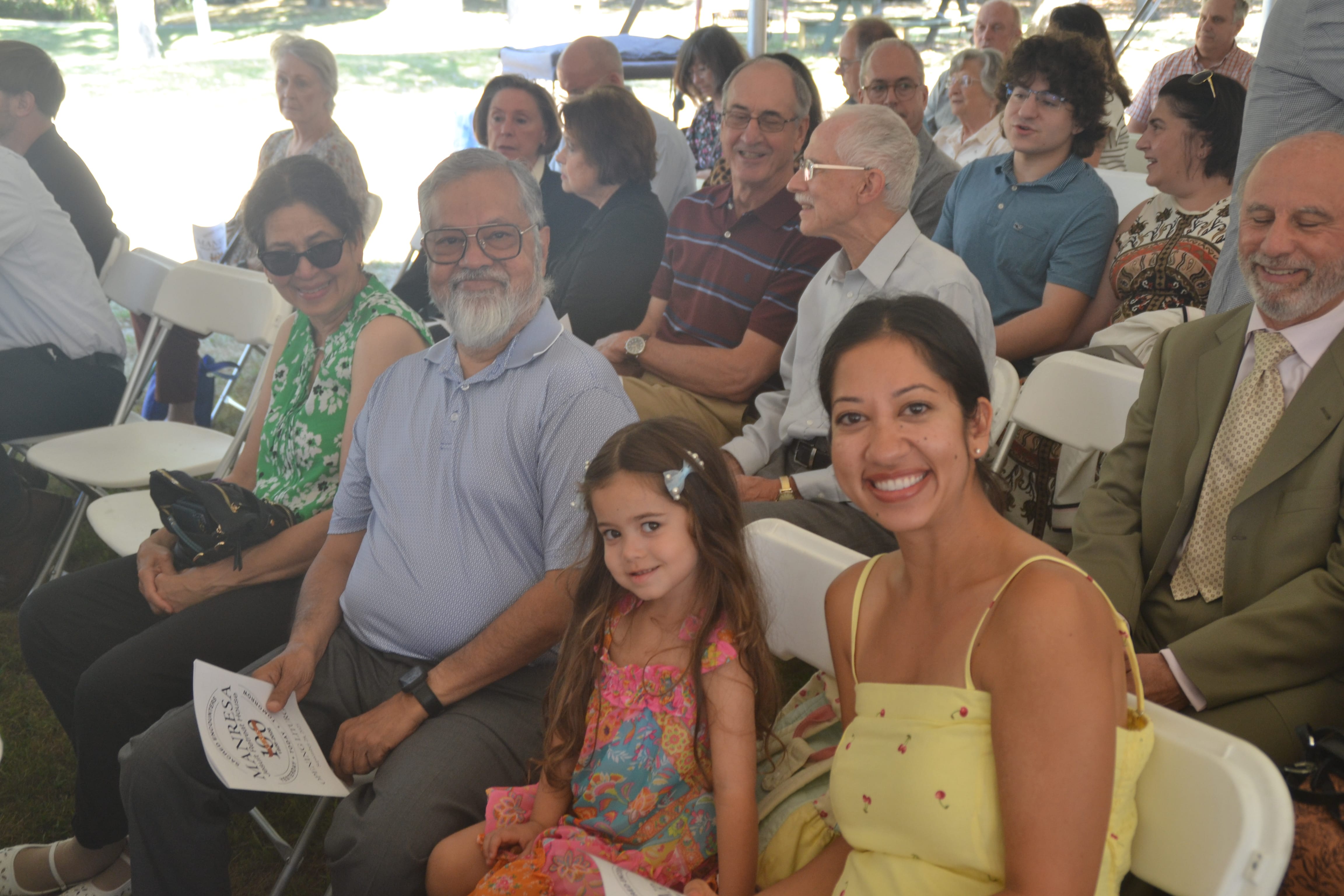
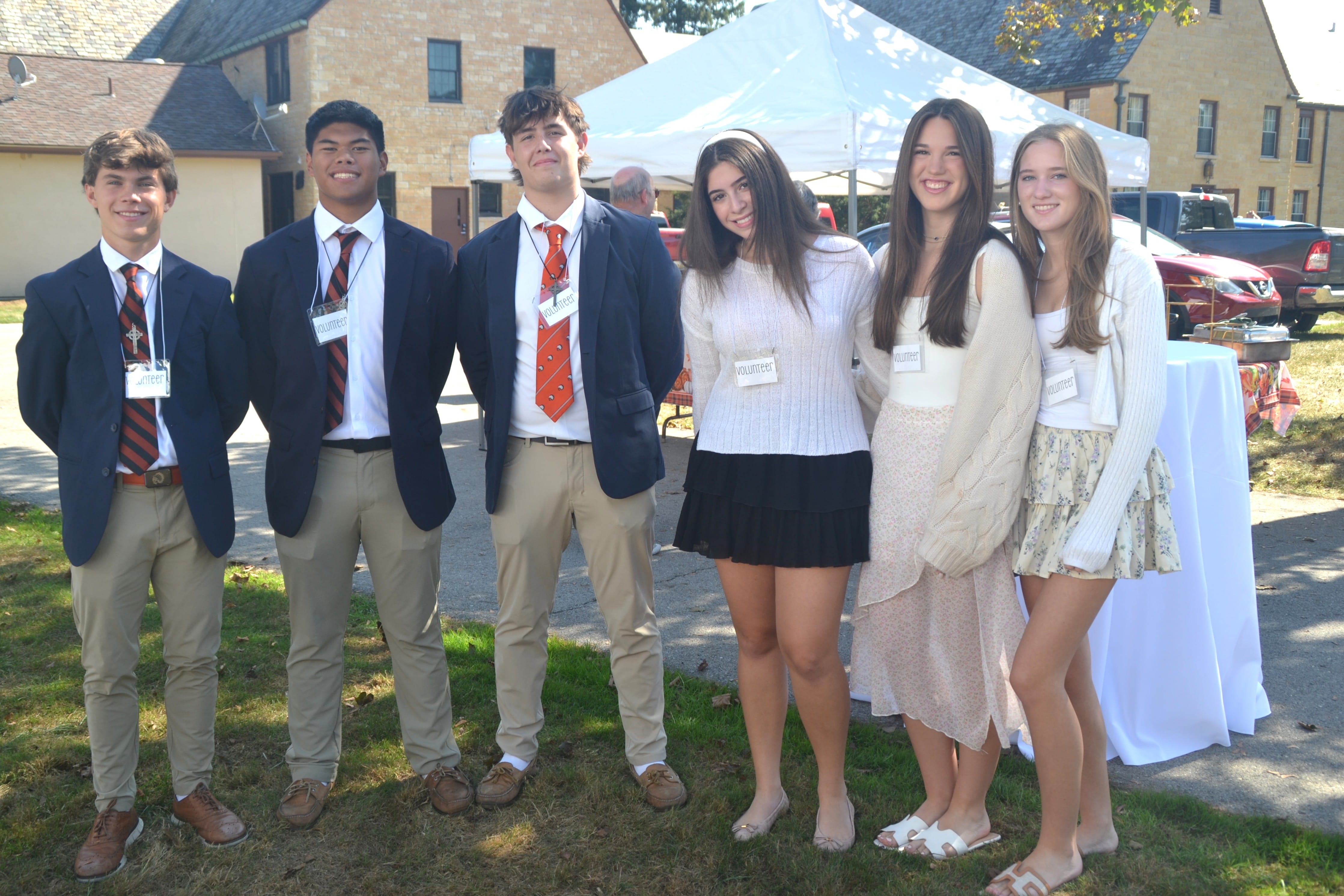
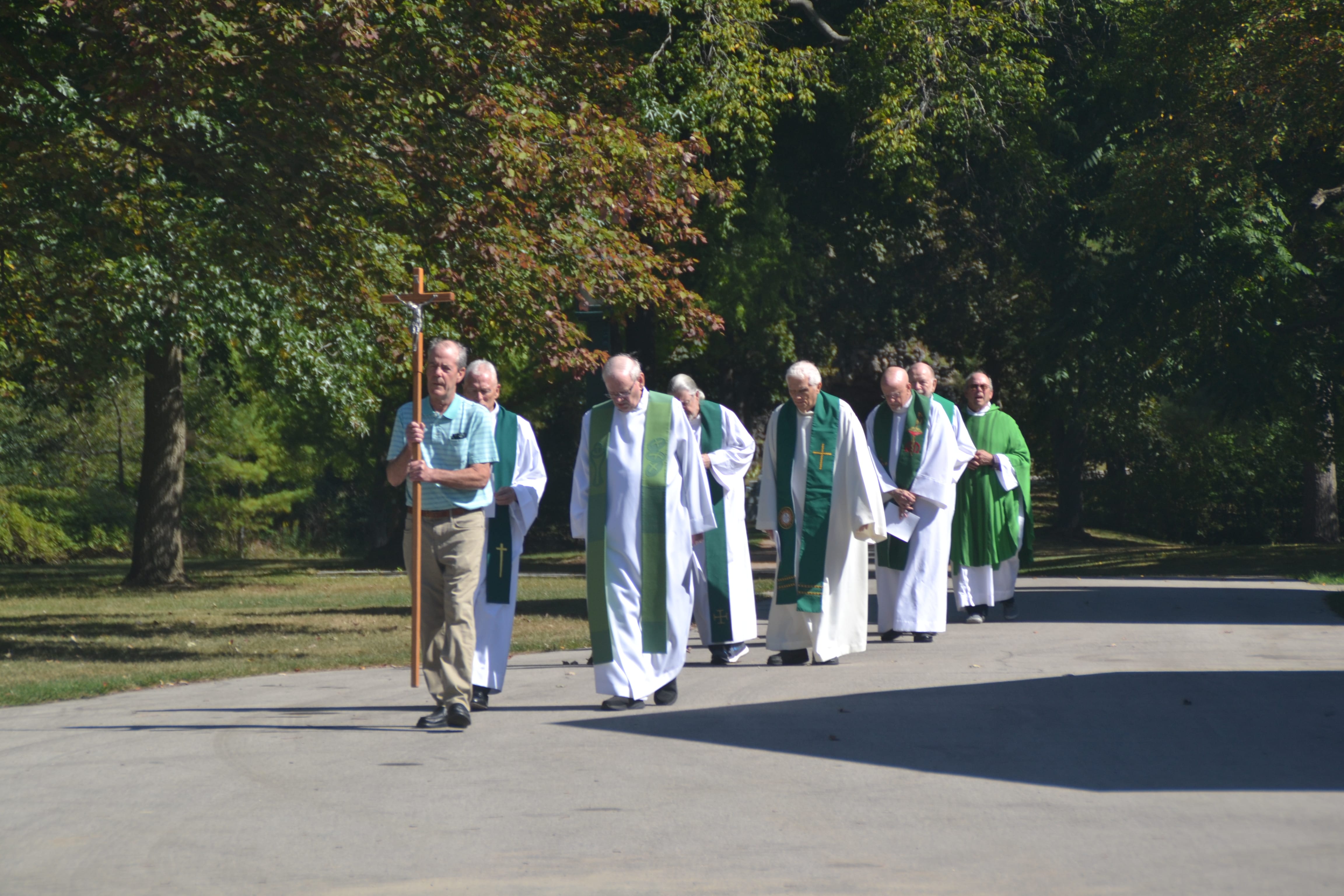
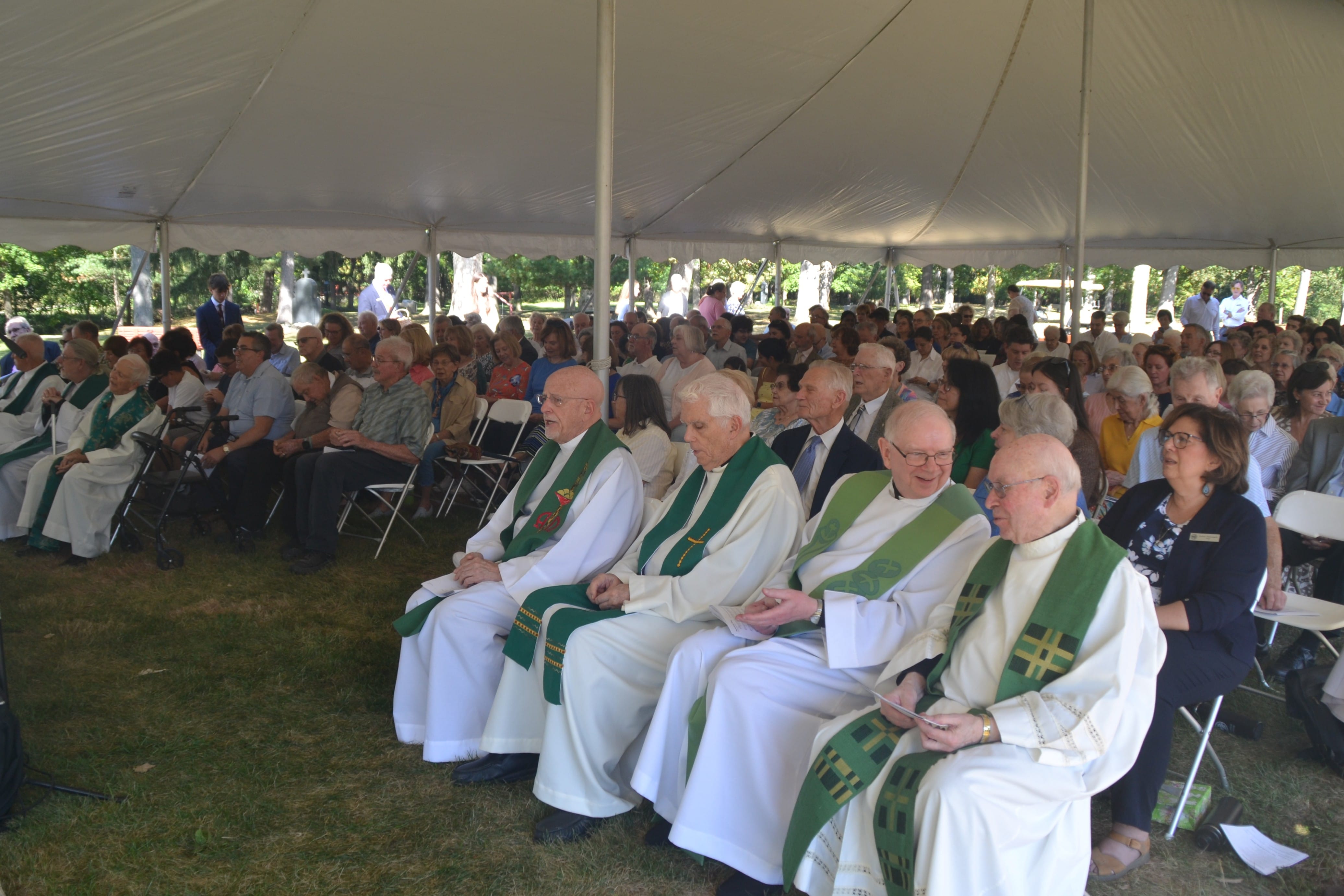
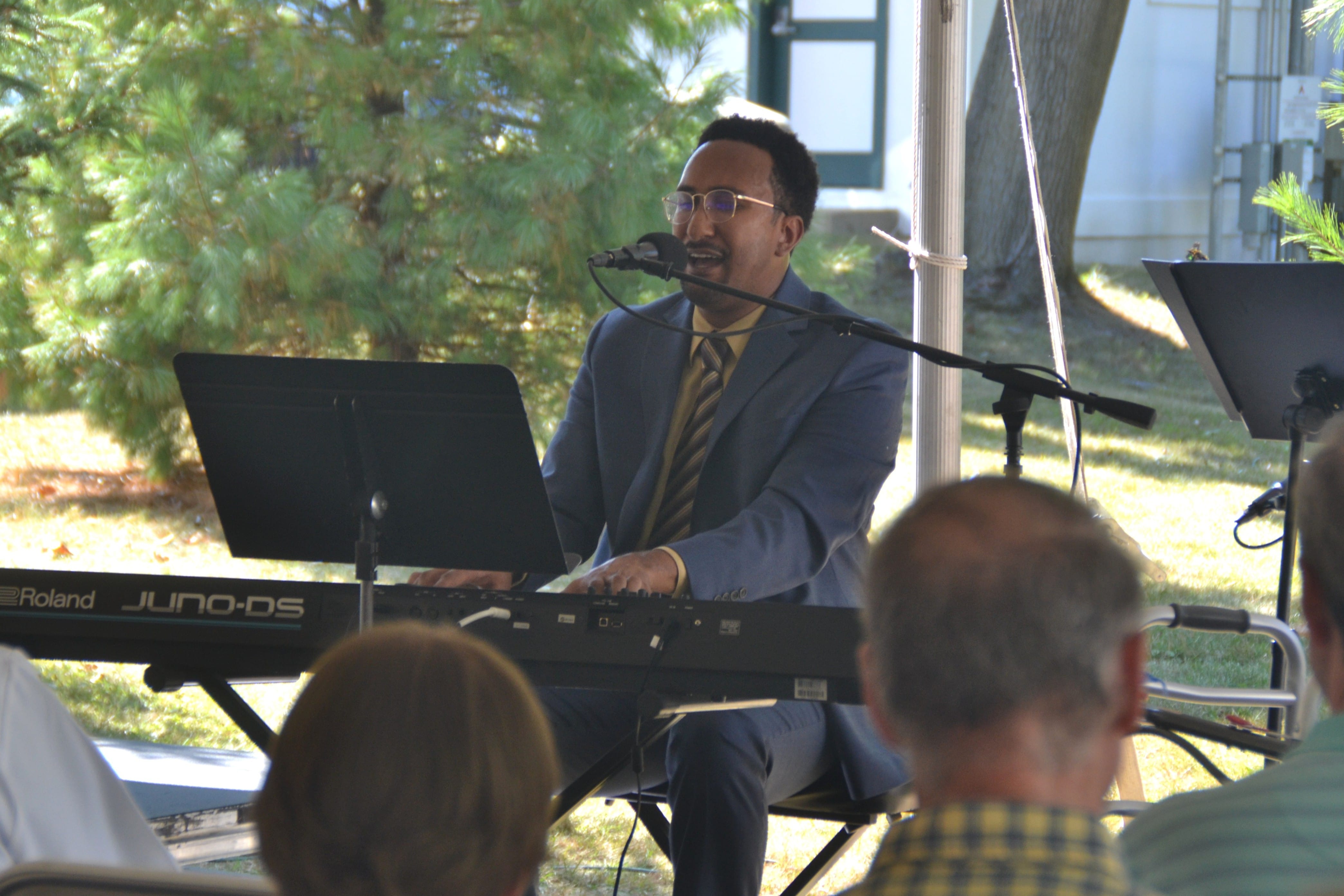
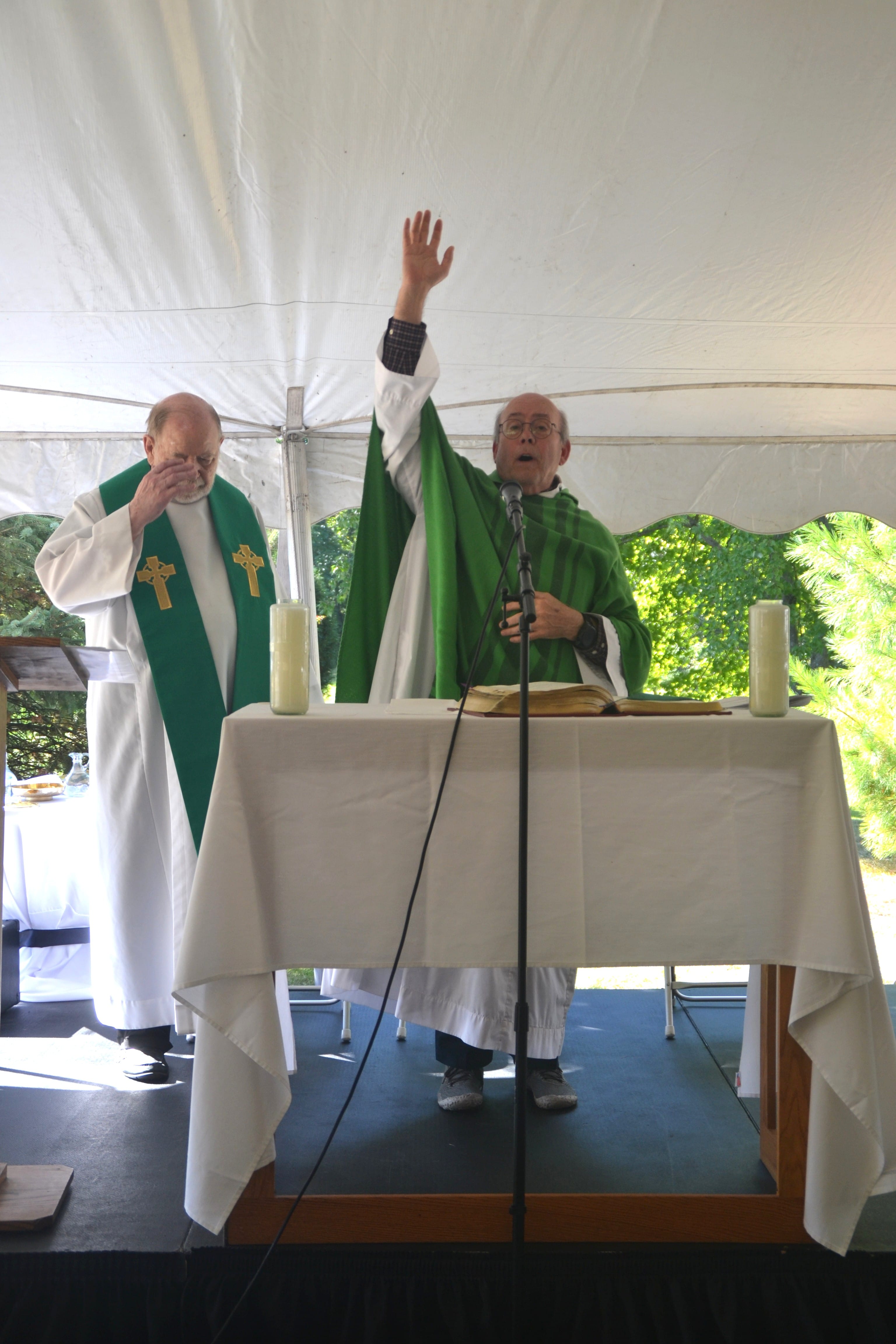
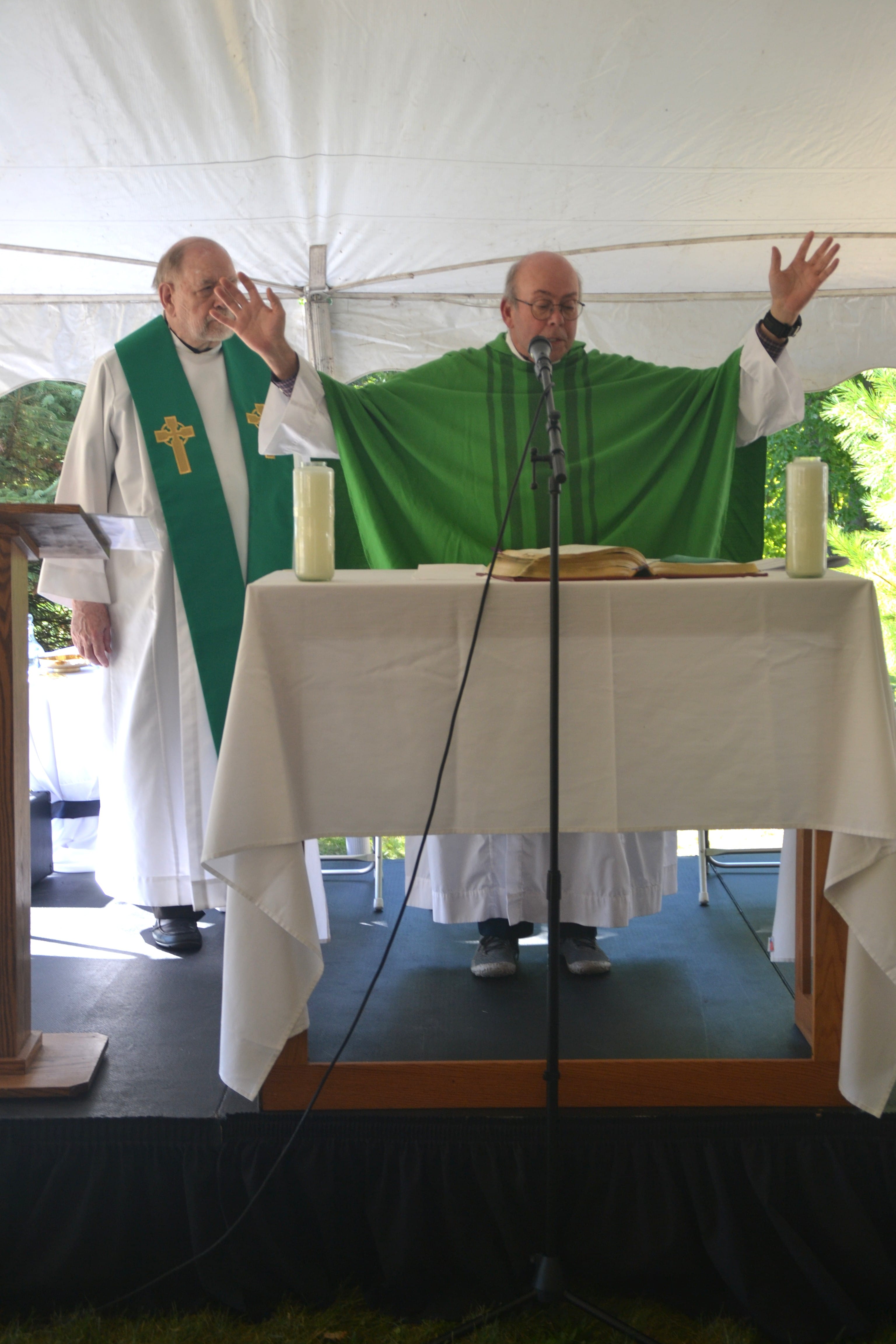
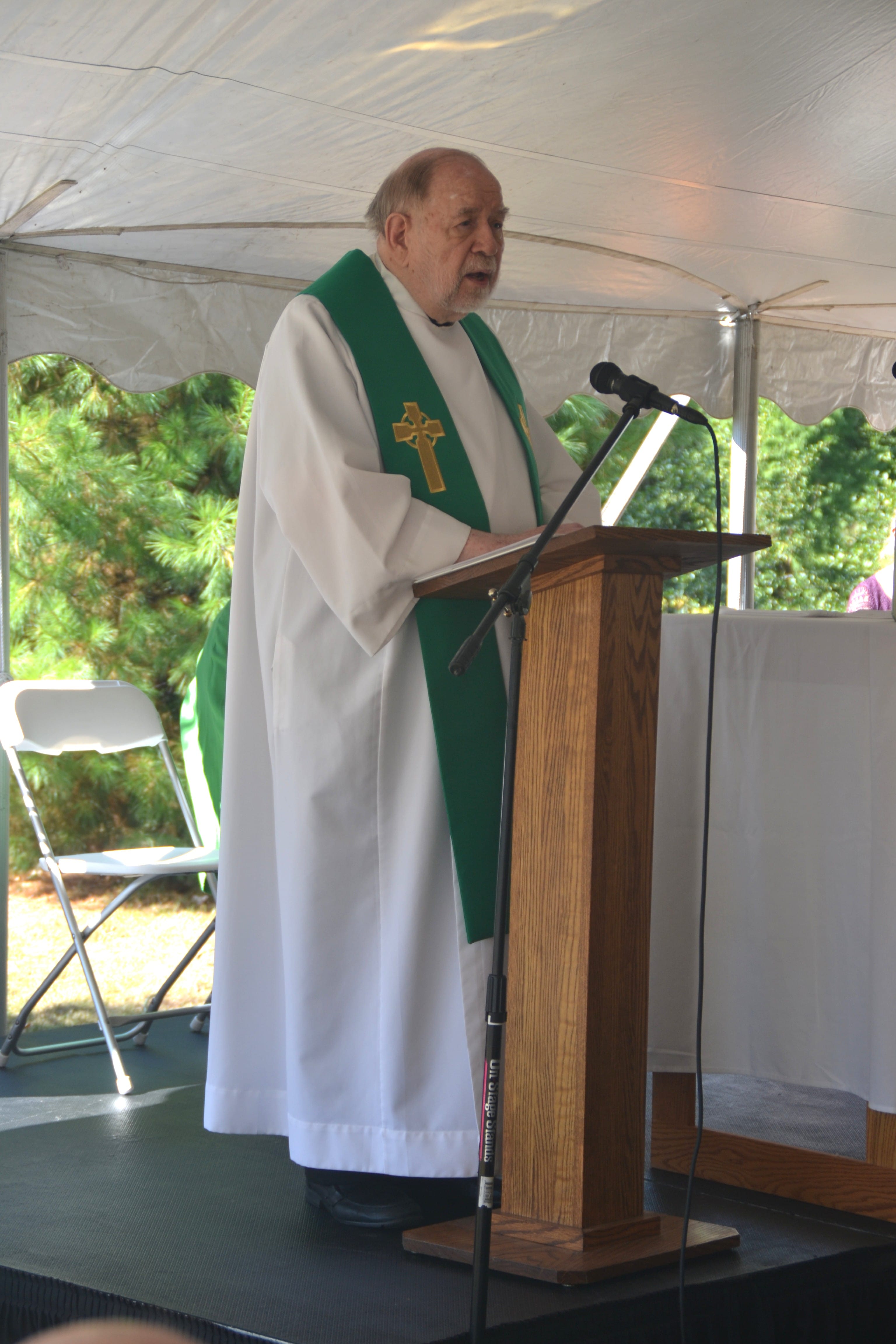
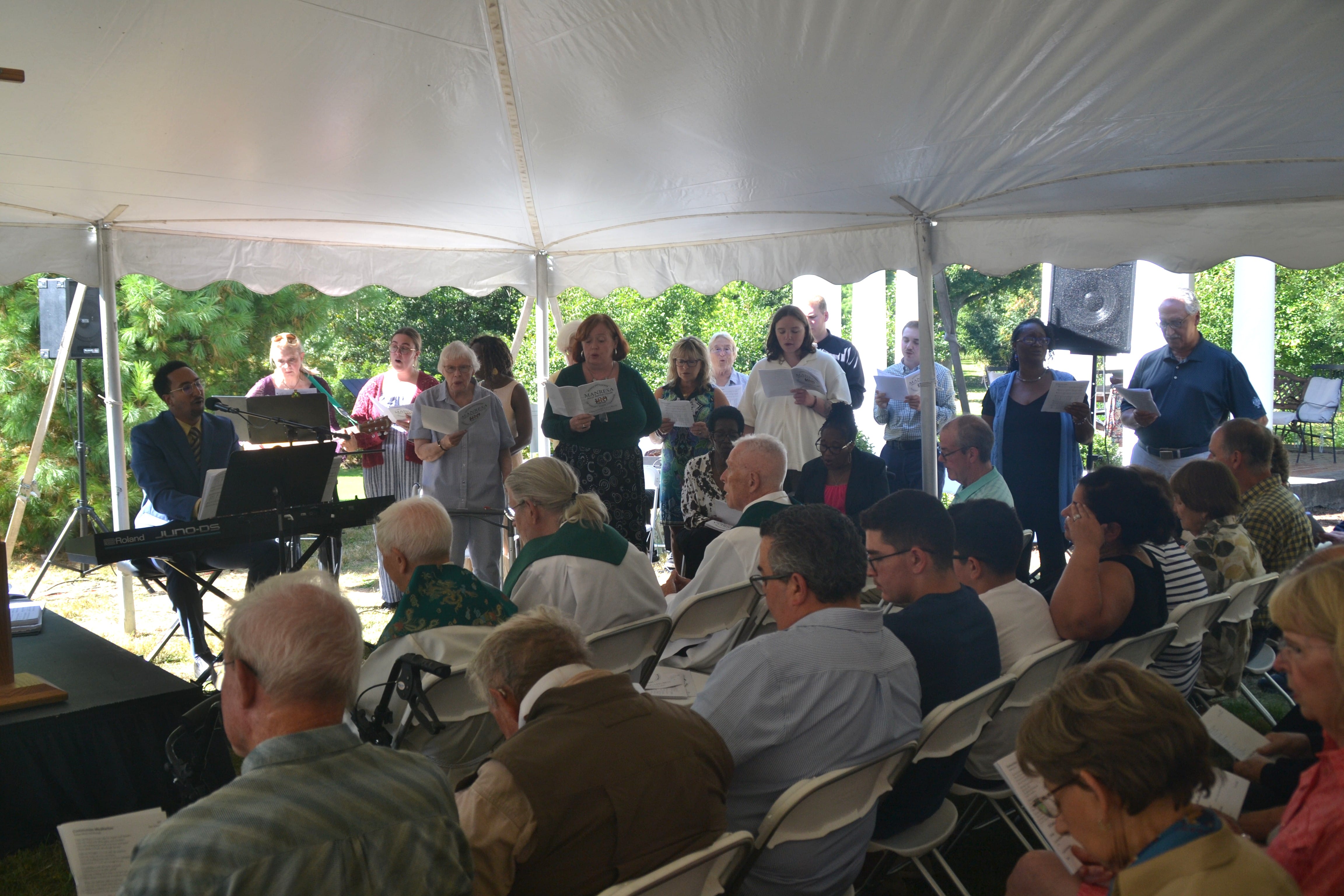
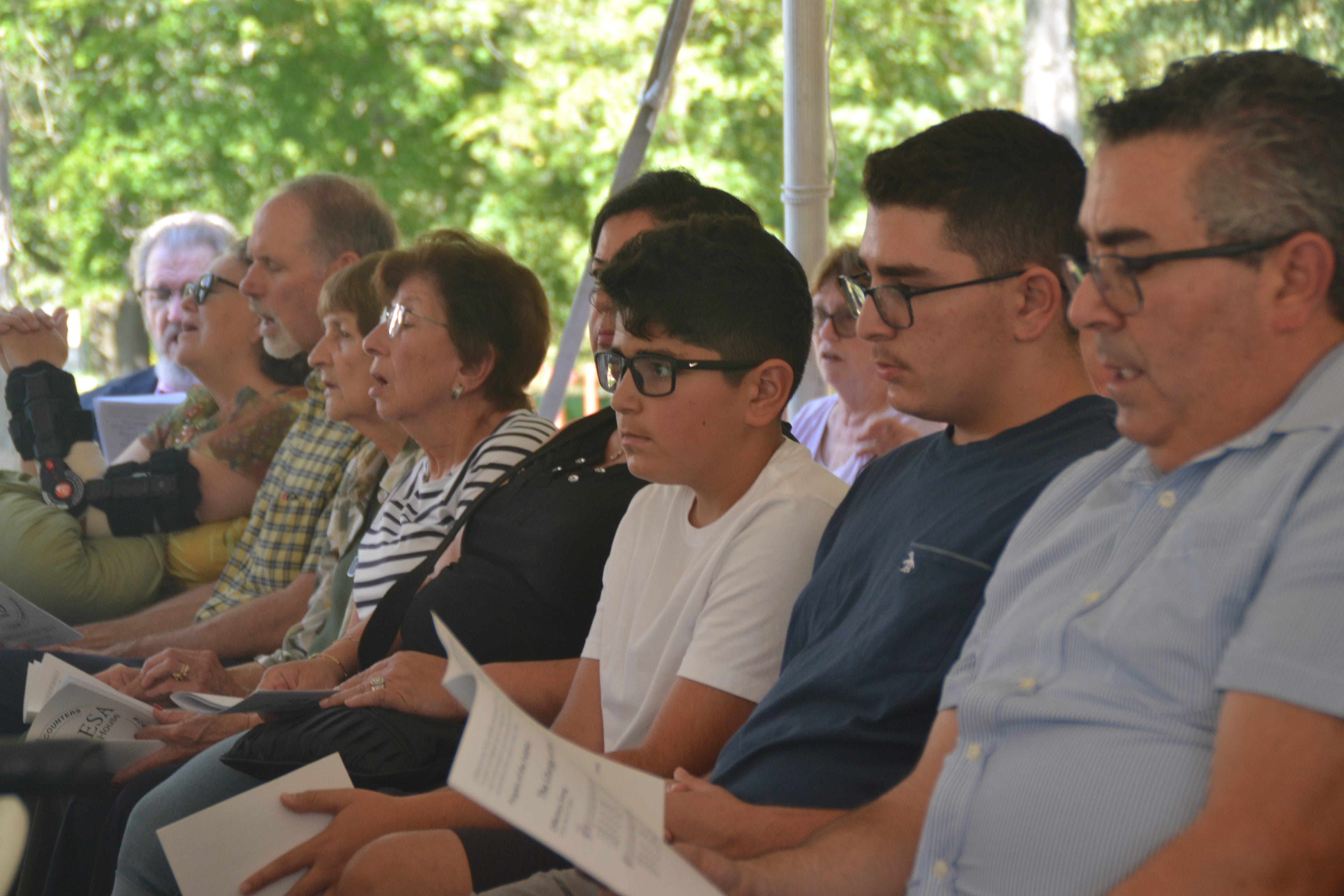
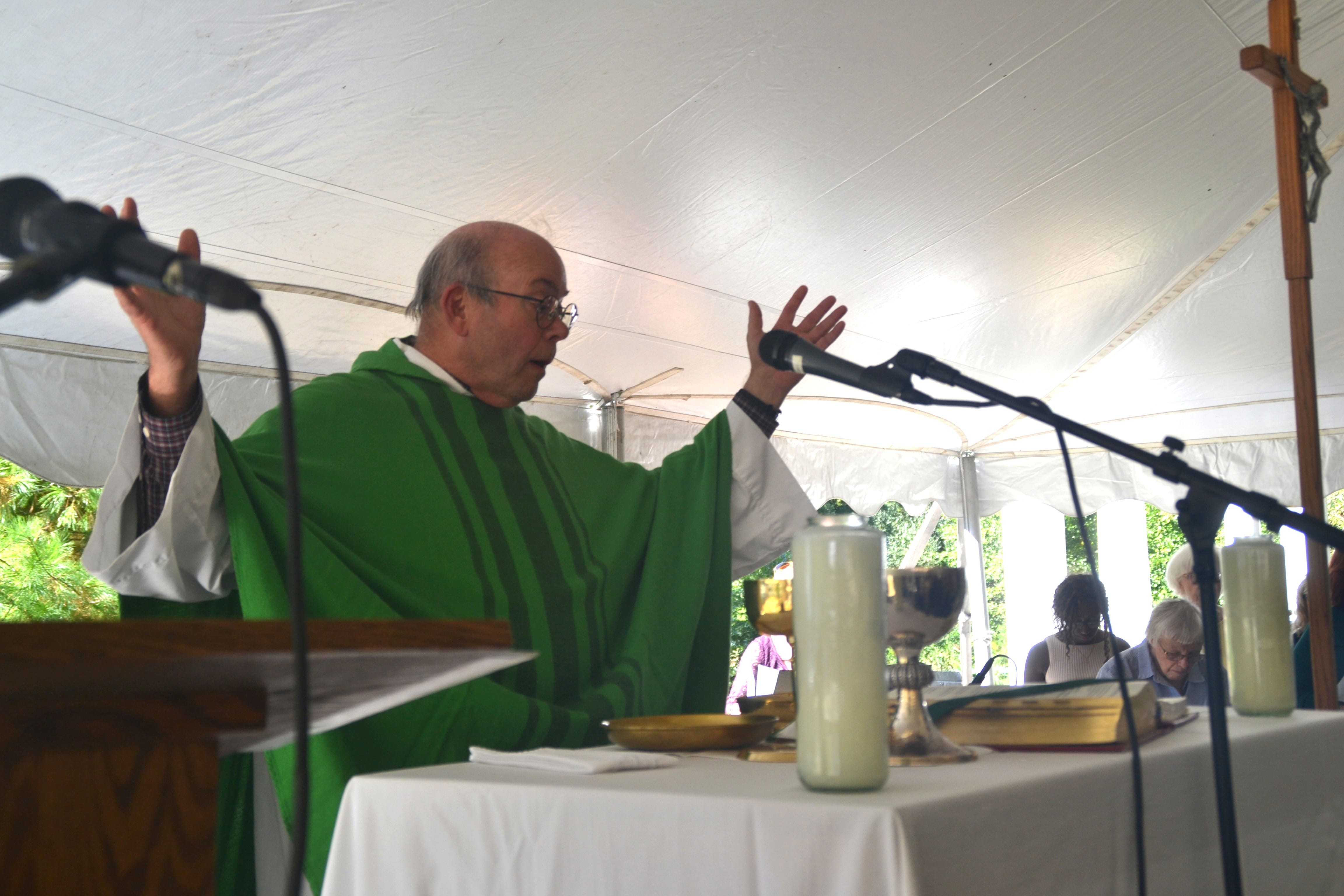
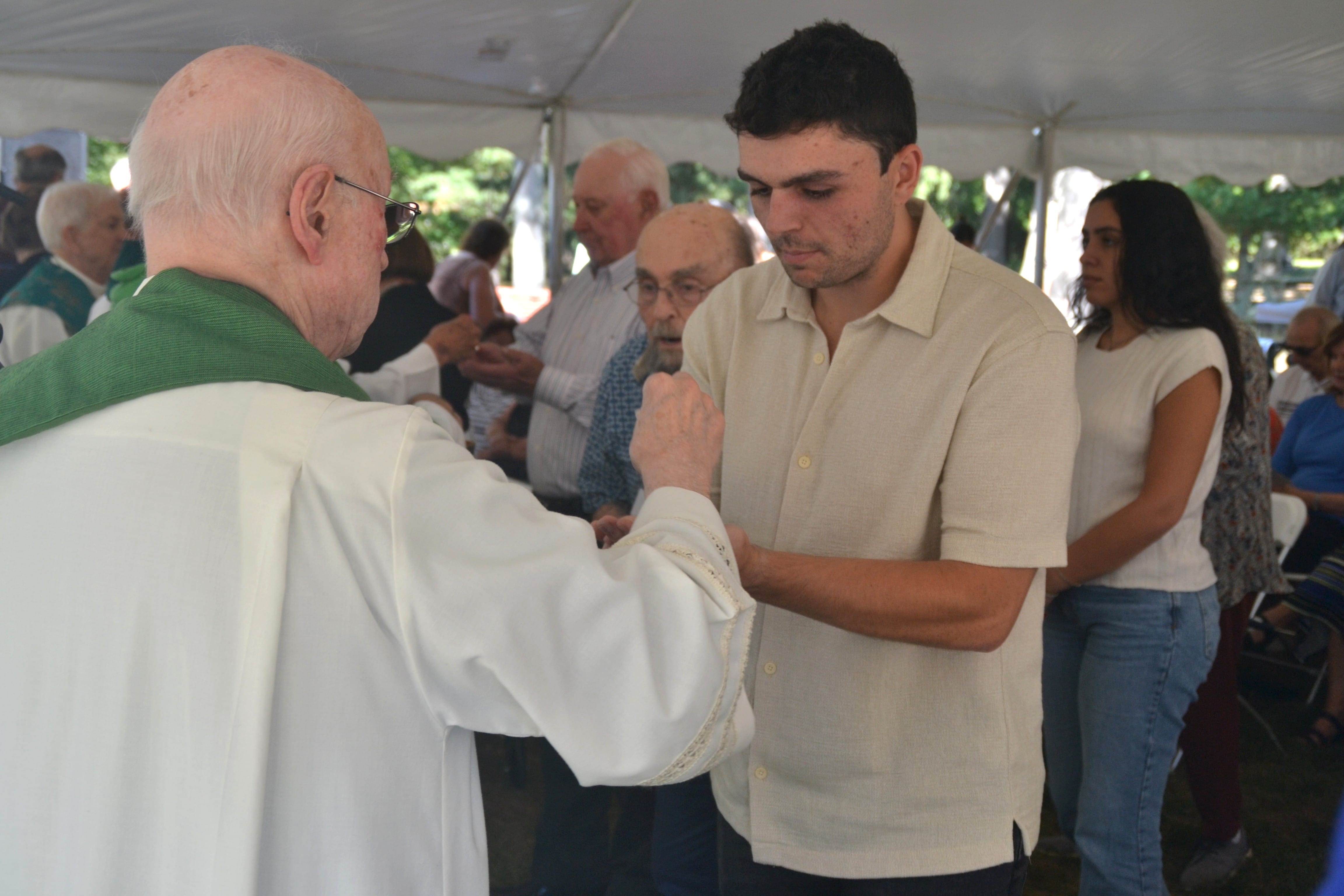
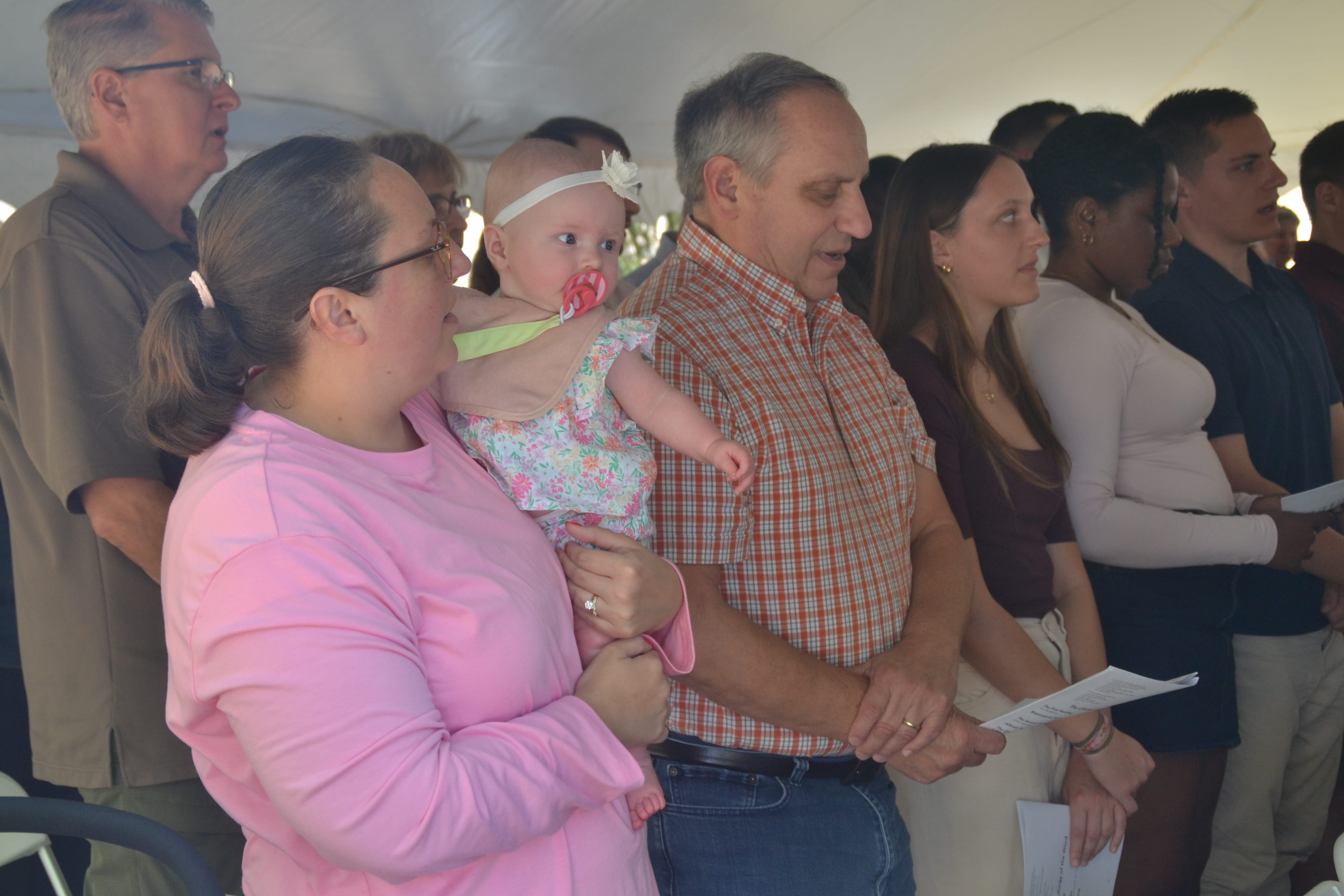
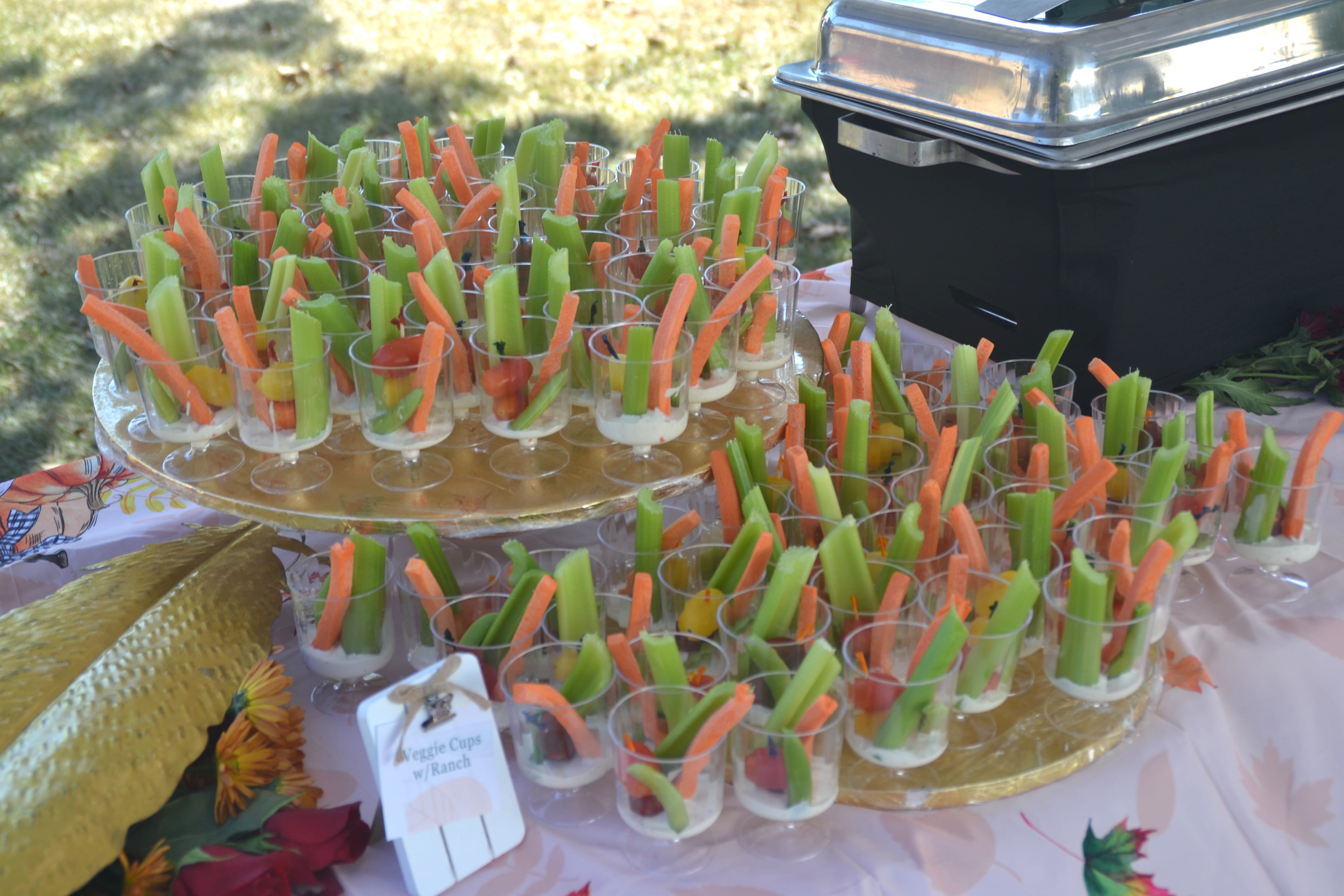
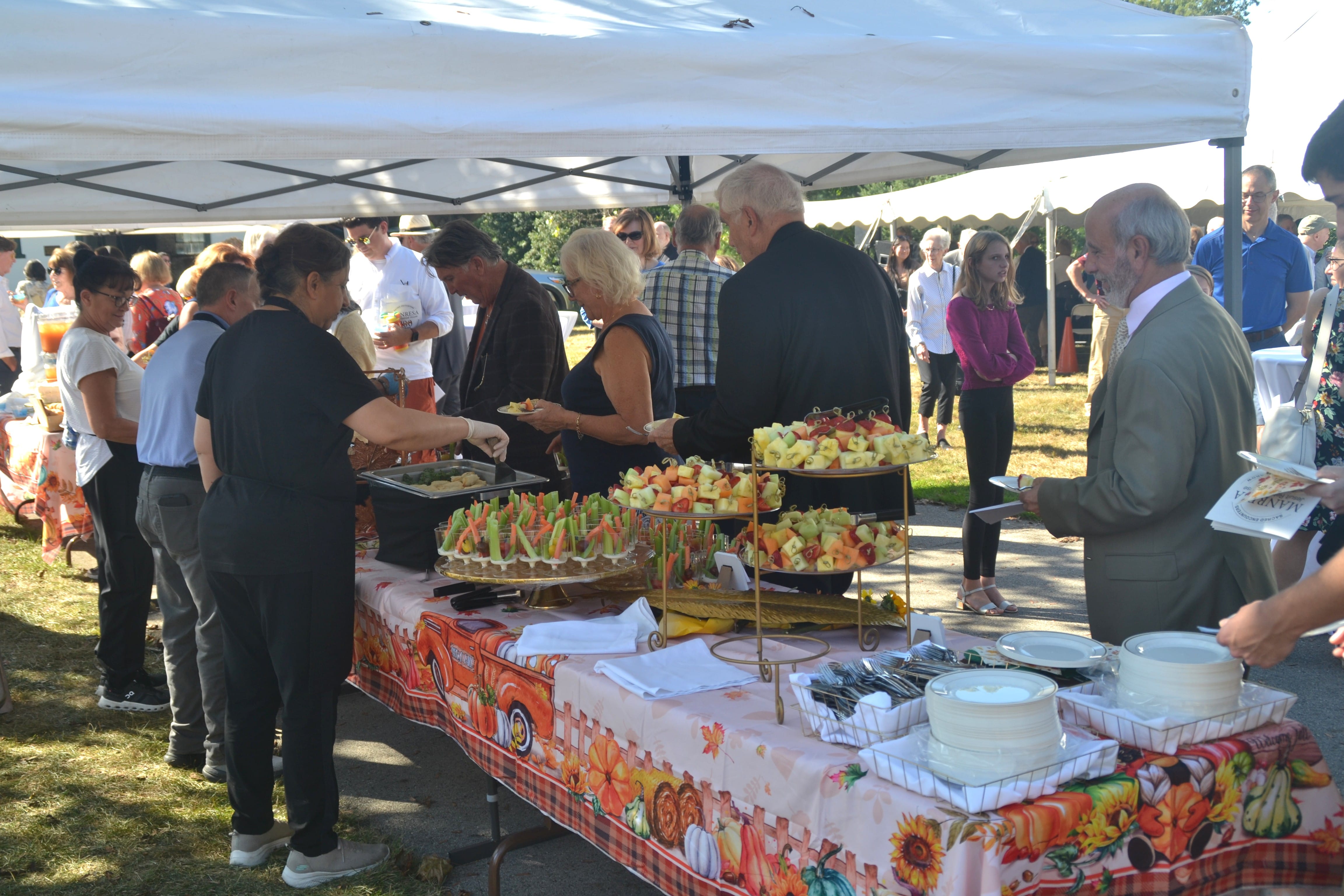
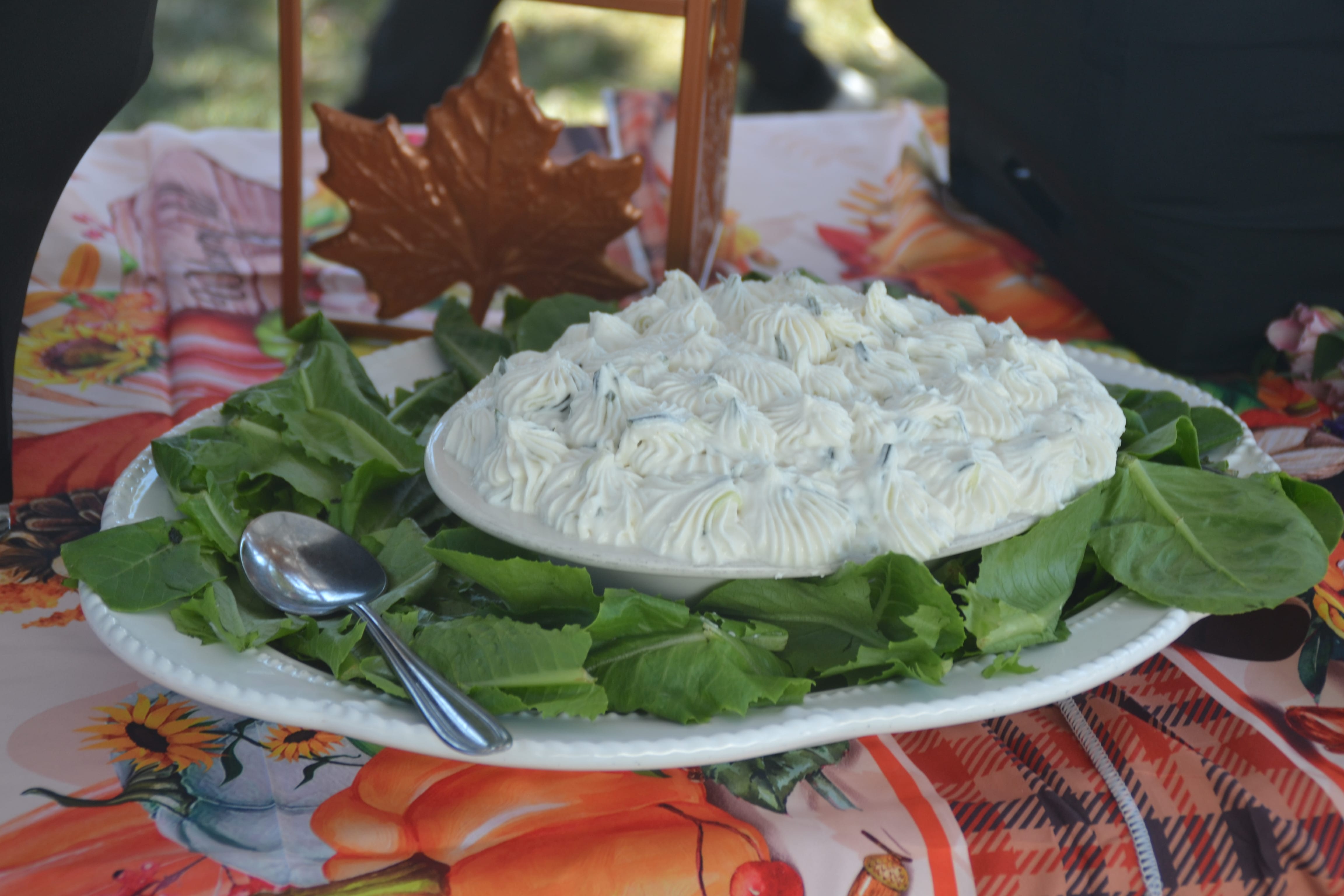
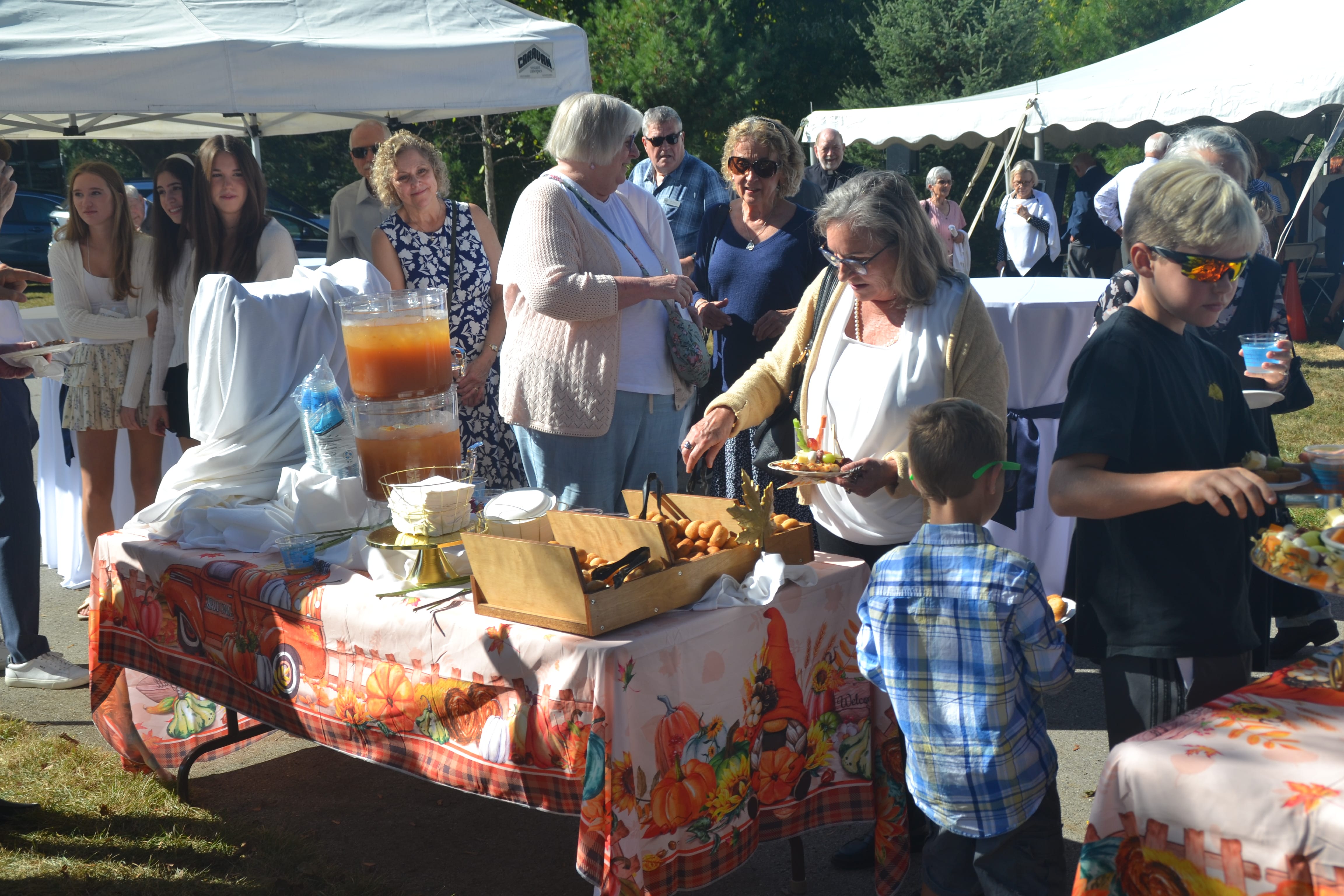
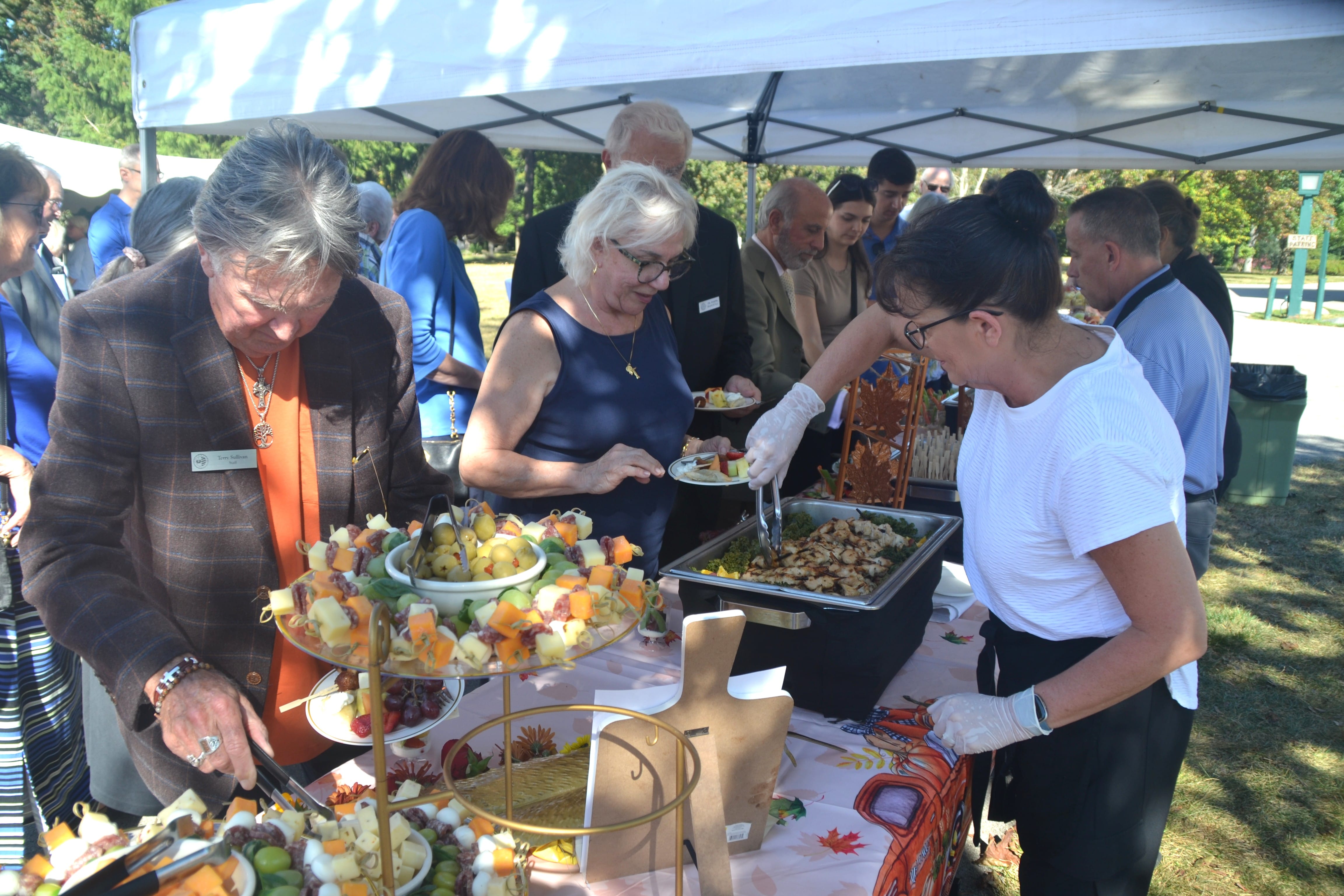
God blessed us with a beautiful day to kick off our year-long celebration of Manresa’s 100th Anniversary. More than 200 people attended the Outdoor Mass on Sunday, Sept. 28. Fr. Fran Daly, SJ, past executive director, and Sr. Linda Sevcik, SM, current executive director, welcomed everyone before the Mass started. Fr. Steve Hurd, SJ served as celebrant, Fr. Peter Fennessy, SJ offered the homily, while other Jesuits helped to distribute communion. The Gesu Parish Choir led the singing. Guests received an engraved memorial stone as a reminder that we are “living stones” made alive by God through faith in Christ (I Pet. 2:4-7, Eph. 2:19-22). After the Mass, Ovations Dining Services served a tasty array of refreshments. Students from Brother Rice and Marian High Schools helped with set up and greeting guests, as did members of Manresa’s staff and board. We are grateful to all those who took part in preparing this special event, to those who were able to be with us and for our online community’s good wishes. To God be the glory! (Photos by Paul Seibold)

Jesuits at Mass
Fr. Peter Fennessy, SJ and Fr. Steve Hurd, SJ
buffet line
buffet line
buffet line

Sacred Encounter

By Meredith Skowronski

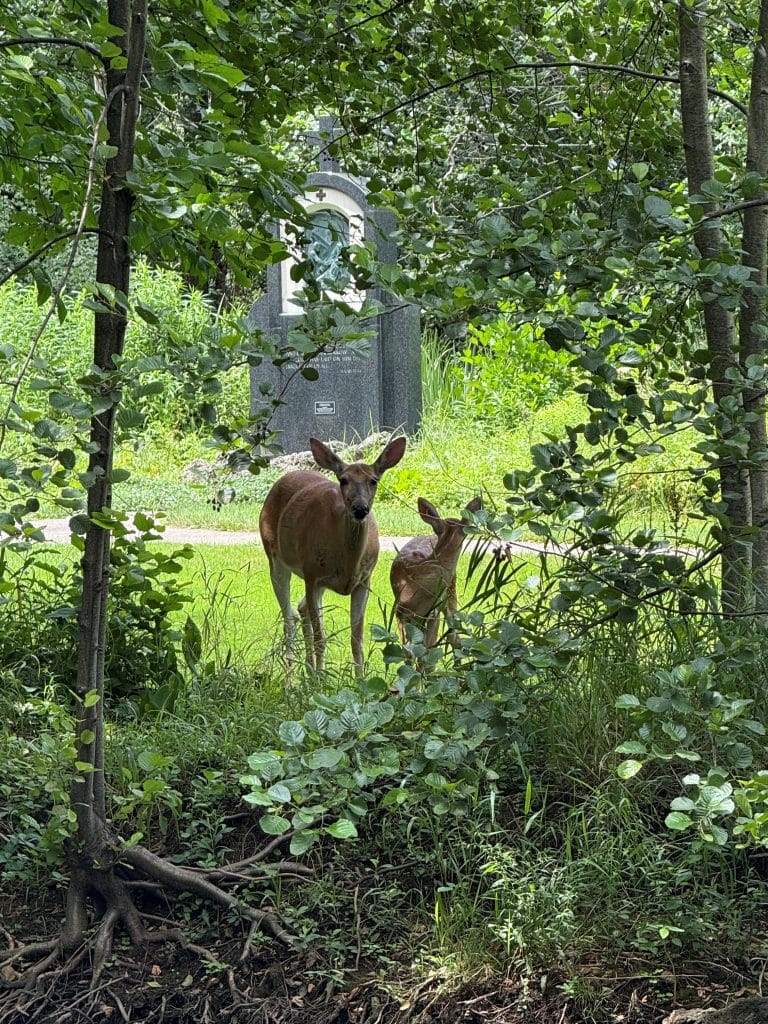
Mother deer and fawn

My father-in-law, Jerry, loved deer.  He would paint them, build them out of clay, carefully molding and coloring them to perfection. When he died suddenly of a massive stroke in 2020, followed closely by the death of my mother-in-law, Joann, in early 2021, deer became a spiritual and mystical creature for our family. Whenever we saw deer, we knew that “Grandma and Grandpa” were close, watching over us, smiling down on us from Heaven.

My husband was diagnosed with bladder cancer two weeks before his mother died. He started weekly treatments that March. Without fail, almost every morning before he would leave for what would be an excruciating round of chemotherapy, we would be visited by deer in our driveway. Grandma and Grandpa–always close.

This past summer, I attended my first individually directed retreat at Manresa. During my time listening to the Spirit in silence, I was led to write letters to my husband and my son, sharing with them how much I value and love them, and expressing my gratitude for the space they gave me to attend the retreat. I found a quiet, contemplative spot by a small stream, surrounded by woods, and began to write to my son.

As I was writing, I noticed movement across the river from me. When I looked up, there were two deer — a mother and a baby. They walked across the path toward me, stopped just on the other side of the stream where I was sitting, perhaps twenty feet away, and gazed at me for the longest time. A mother and a baby, just as I (a mother) was writing a letter to our son (my baby!). The deer stayed for quite some time, watching me, studying me, and simply being present with me. I spoke to them, said hello, and thanked them for visiting. I told them they were beautiful and said a prayer, thanking God (and Grandma and Grandpa) for stopping by to see me. It was a beautiful and unexpected God-wink.

Throughout my five-day retreat, God gifted me with several of these moments, and I am thankful that I had the space, openness, and attentiveness to receive them. They were life-changing for me and reminded me of how deeply beloved I am, how connected I am to God in all things, and how God is always present to me.

For more information on Manresa’s 100th Anniversary, visit manresa-sj.org/100Years.

Manresa celebrates 100th Anniversary

Outdoor Mass on Manresa Grounds September 28 to Launch Observances

Bloomfield Hills, MI – September 1, 2025 – Manresa Jesuit Retreat House held its first retreat on the weekend of September 23-26, 1926. This year on September 28, Manresa begins a year-long celebration called “Sacred Encounters: Yesterday, Today, Tomorrow” to mark 100 years of helping men and women grow spiritually through prayer, reflection, guidance and teaching according to the Ignatian tradition.

The festivities begin with an Outdoor Mass at 2:00 PM on Sunday, September 28, 2025. They continue with a banquet on May 7, 2026, with Detroit Archbishop Edward Weisenburger as keynote speaker, and an Outdoor Mass and Picnic on September 20, 2026. Retreatants and guests are invited to each special event to honor our past, celebrate our present and look ahead to our future.

“For a century, Manresa has been a sanctuary for countless individuals who have found spiritual renewal and deeper connection with God,” said Sr. Linda Sevcik, SM, Executive Director of Manresa since 2021. “The spirituality of Saint Ignatius continues to guide Manresa’s mission, and our house and grounds offer a quiet and safe space where thousands of people each year come to encounter the Sacred and experience the transformative power of the Spiritual Exercises of St. Ignatius of Loyola.”

From its beginning as a retreat center for men, Manresa has grown into a spirituality center offering retreats and programs for men, women and youth.

Building on the legacy of the past 100 years and looking forward to the next 100 years of serving those who seek to deepen their faith, Manresa Jesuit Retreat House stands as a sign of God’s presence in our midst.

About Manresa: Manresa Jesuit Retreat House is a Catholic retreat center that helps men and women grow spiritually through prayer, reflection, guidance and teaching according to the tradition of St. Ignatius of Loyola. This is accomplished through group retreats, individually directed retreats, the Spiritual Exercises in Daily Life, days of prayer and recollection, and various programs including Scripture study and formation in Ignatian spirituality. For more information about Manresa’s 100th Anniversary celebration, visit manresa-sj.org/100Years.

# # #

Manresa Jesuit Retreat House

1390 Quarton Road, Bloomfield Hills, Michigan 48304-3554

www.manresa-sj.org