
The Prodigal Son
By Fr. Peter Fennessy, SJ
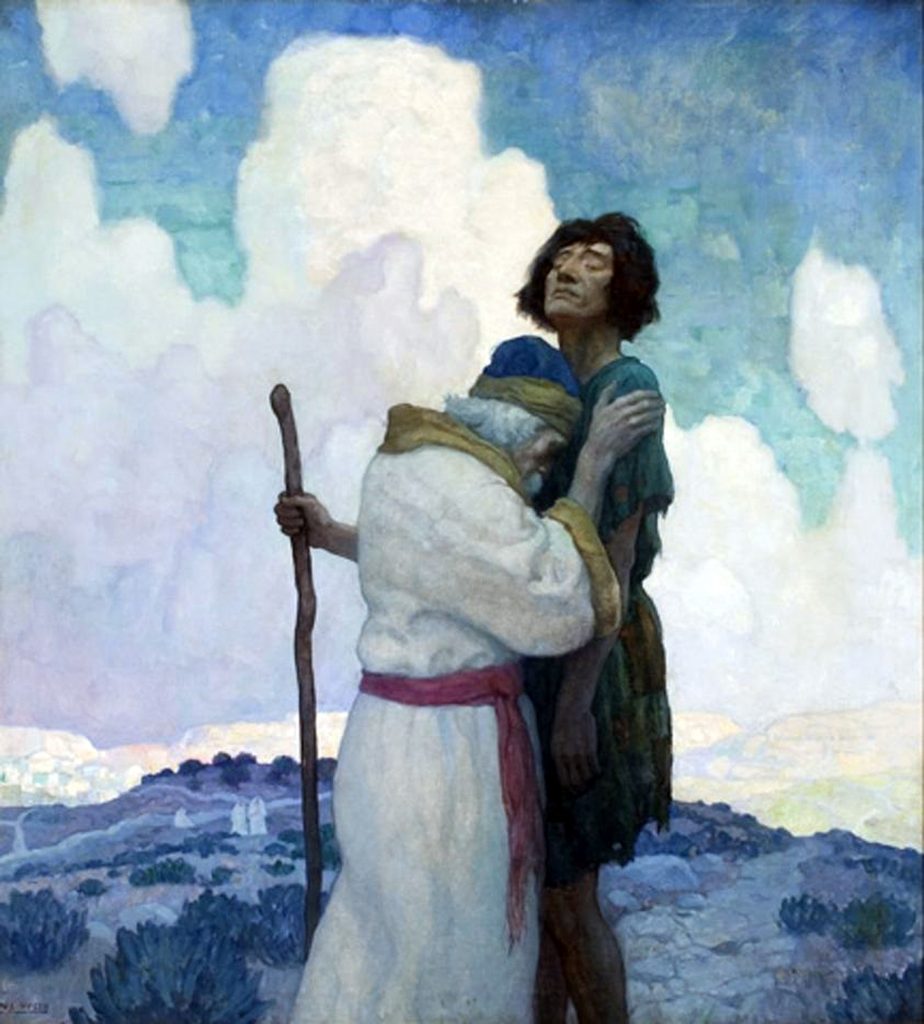
N. C. Wyeth, The Prodigal Son (c. 1926-1927),
oil on canvas, 45 × 40 inches, Kirk in the Hills, Bloomfield Hills, Michigan.
Most paintings of the prodigal son portray him embracing his father or kneeling before him, almost always with a bent head. Wyeth has unusually portrayed him with his head held high and drawn away from his father. One hand holds his walking stick and the other hand hangs by his side. He doesn’t dare return his father’s embrace. His original demand for his inheritance with its implied “wish you were dead” was an unspeakable and unforgiveable offence. His father should have declared him dead, sat shiva for him and even now have sent his servants to drive him away. His repentance arose more from hunger than sorrow, and he’s aware he doesn’t deserve acceptance even as a hired man, paid each day for his daily work, an outsider and less a part of the family than its slaves.
But his father had been watching the road, and seeing his son returning, he threw propriety to the wind, ran to the boy, embraced him and kissed him. The love and mercy, forgiveness and acceptance that the prodigal undeservedly met shamed him more than he can stand. It will take some time for him “to learn to bear the beams of love.”
