
Christ and the Sinner
By Fr. Peter Fennessy, SJ
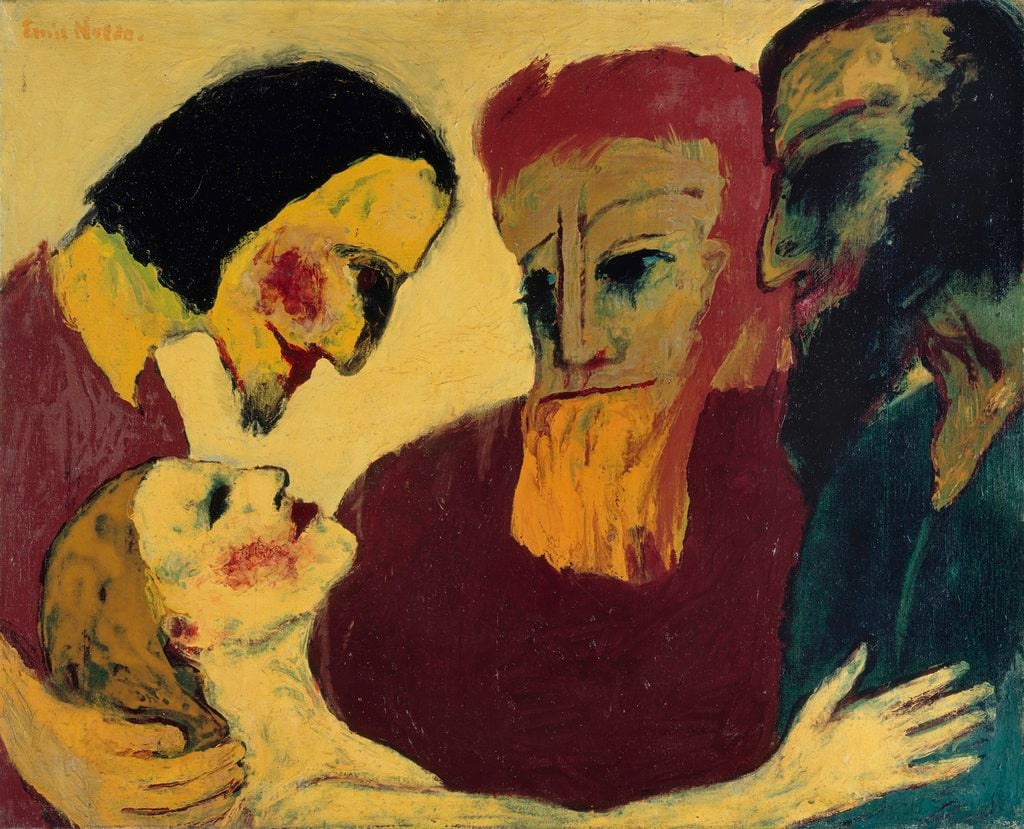
oil on canvas, 33.9 × 41.8 inches, New National Gallery, Berlin.
Emil Nolde’s bold colors and exaggerated features in “Christ and the Sinner” (1926) add intense emotionality to this painting. The Nazis considered it degenerate; art critics and historians call it Expressionism. It portrays a sinful woman who washed the feet of Jesus or “The Woman Taken in Adultery,” the title of the etching this work was based on. Without a contextual background the reference is ambiguous. Did Nolde use this ambiguity to unite the two stories?
The Pharisees had brought Jesus a woman caught in adultery (John 8:3-11). The Law decreed she should be stoned to death. What did He say? Whether Jesus contradicted the Scriptures or His own constant message of mercy, they had Him. The Law actually said “the couple” should be stoned, but the Pharisees let the man get away, because they had less concern for the Law than for trapping Jesus. Jesus escaped their trap, shamed them into fleeing and didn’t condemn the woman. Later realizing she had been forgiven, she came to Jesus and washed his feet with tears of gratitude (Luke 7:36-50). Christ’ parable of the two debtors clearly indicates the forgiveness had produced her show of love, and not the other way around.
